
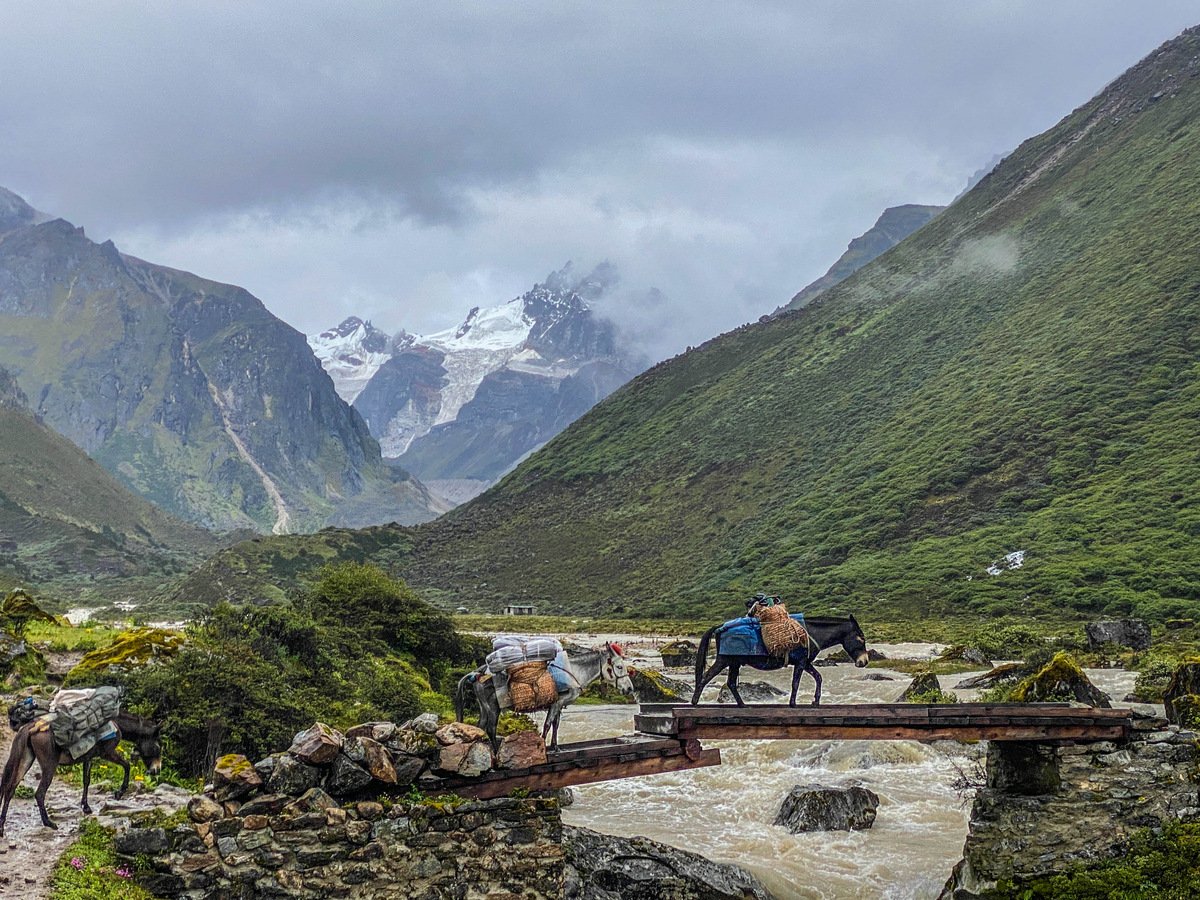
Aptly dubbed as one of the most scenic treks in Bhutan, the eleven-day Laya-Gasa trek loops through magnificent landscapes dotted with verdant trees and alpine flowers while the route across the Mochhu river is simply breathtaking.
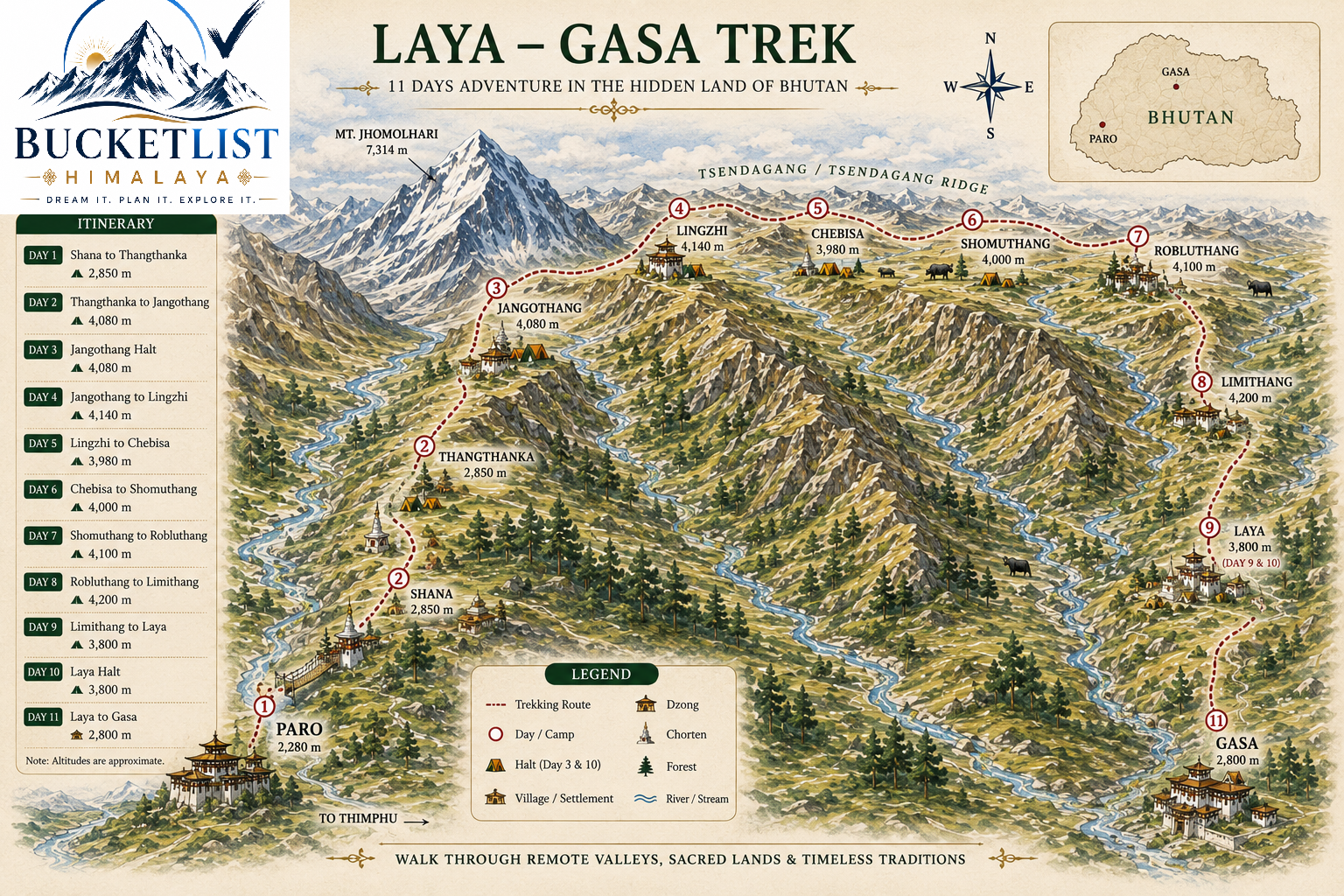
The journey begins at Sharna Zampa in Paro and takes you through gorgeous alpine meadows, high mountain passes and dense sub-tropical jungles before finally descending into the Damji village in Tashithang, Gasa.
The trail abounds with exotic mammals such as the Takin and the blue sheep. The exotic yak-herding semi-nomadic communities are sure to steal your gaze with their distinctive dresses, unsullied customs, and simple way of life.
Highlights
- Alpine meads and valleys carpeted in flowers; date with the semi-nomadic yak herders, the majestic Himalayan Monal, and Blue Poppy.
As we finally land into the mythical Kingdom, we will be greeted by our staff at the Paro international airport who will then escort you to your pre-booked hotel.
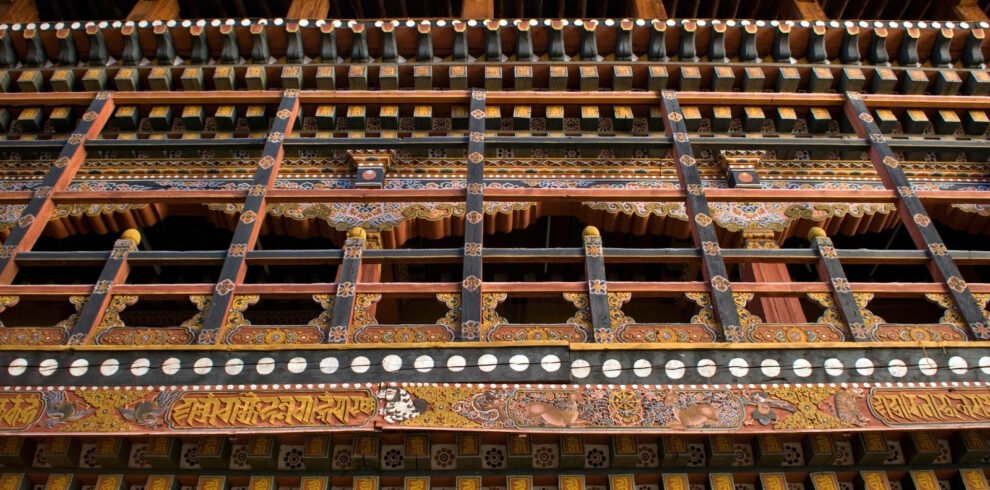
We then visit the Paro National Museum overlooking the Paro Dzong (fortress) and the valley floor below. After tour of the museum we head to the most notable landmarks in town, the Paro Rinpung Dzong or the fortress on a heap of jewels, which was built in the mid 17th century.
In the evening we laze around the main town square which is a neat two rows of traditional Bhutanese houses flanked by lush paddy fields. Overnight at the hotel in Paro.
No tour of Bhutan is complete without stepping foot at the majestic Taktshang monastery, a temple complex built amid the sheer face of a harrowing cliff. The hike takes about 4-5 hours from the base and is located at about 3,180m.
Visited and blessed by the 8th century Buddhist saint Guru Padmasambhava, legend has it that the Guru visited the site of the present monastery while riding a tigress, believed to be a manifestation of his consort.
Towards evening we drive towards the majestic Drugyel Dzong, recently rebuilt after a devastating fire, and considered one of the finest specimens of Bhutanese architecture. We finally camp at the riverside in Sharna Zampa, the starting point of our trek.
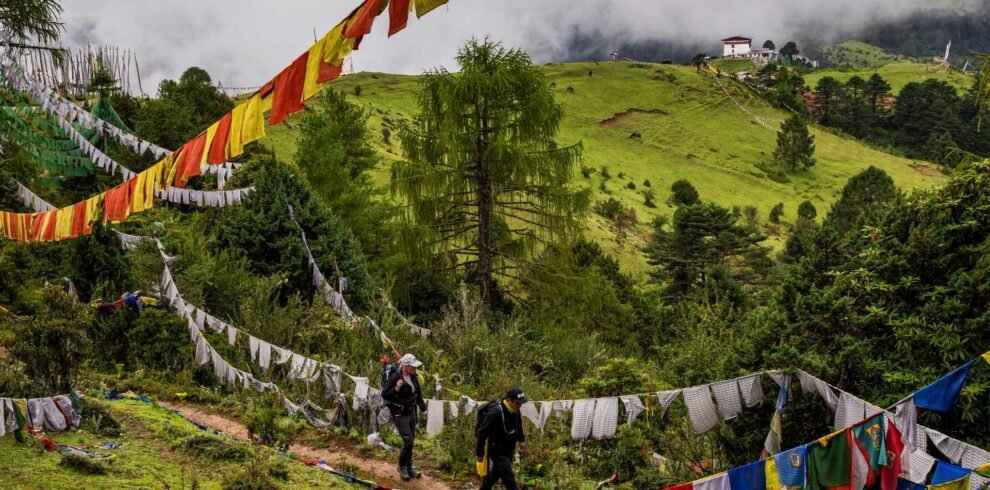
We finally begin our trek across a dusty ancient mule track and gradually ascend. While the initial climb can be a bit tasking, the magnificent views and the vastness of the untamed nature add to the allure of the tasks ahead and beyond.
We camp at a scenic meadow located at 3,610m from where we can view the magnificent Jomolhari peak, our ever omnipresent companion throughout the trek.
The early morning adventure across this trail is our best bet to have a closer view of the mighty Jomolhari Peak, just in case we missed it earlier due to unfair weather conditions. We then ascend to the highland village of Soe, Takethang and Dangothang and finally camp at Jangothang (4,080m) considered the base camp of the Jhomolhari.
The excursions at Jangothang are considered some of the most memorable in the entire loop. While we take a day’s rest to rejuvenate our tired bones, we explore the valley which has its own magical allure to it. From the unkempt yak herders to majestic views of blue sheep and Himalayan pheasants, the views at Jangothang will never cease to amaze you.
The trail leads you to Nyilila Pass (4,870m) from where the panorama of the majestic Himalayan landscape is unmistakable. The intimidating sights of the peaks of Tsherimgang and Jichu Drakey is an added attraction to the entire feast of incredible sights and vistas.
We then gently descend to a meadow called Chasithang (4,010m), often used by yak-herding nomads, where we will camp for the night.
The route towards Chebisa is comparatively shorter and easy across the entire loop. Thus, we start slow and soak ourselves in the bounty of nature. The highlight of the trip is the ancient Lingzhi Dzong, located at 4,220m, and was an important bastion that guarded Bhutan’s northern frontiers in the not so distant past.
We camp for the night at a place called Chebisa (3,880m), just after crossing the hamlet of Goyul.
The initial early trek starts with a long ascent behind Chebisa Village (2-3 hours) through a wide pastureland towards Gobu La/Gogu la pass (4,410m), also inhabited by nomads and highlanders.
The route is richly inhabited by Takin, Bhutan’s national animal, before we reach a place called Shakepasa and finally our campsite at Shomuthang (4,220m).
The highlight of the route is the majestic view of Kangbum (6,525m) which glistens in the late autumn snow. The sights at Jharila Pass (4,750m) from where one can also view glimpses of the Sinchela Pass. After some descend we will reach at an enormous plain valley where in summer we can spot the national animal Takin who migrate there for a salt.
The Gangchenta Peak (6,840m) also looms beyond the horizon as herds of Takin graze in the meadows. We finally land at Robluthang (4,160m) where we camp for the night.
The point at Sinchela Pass (5,005m) is the ultimate pie in this route as you get glimpses of a moraine lake valley which teems with majestic alpine birds and flowers. We camp at a scenic locale at Lingmithang camp (4,140m) from where we are treated with majestic views of the Gangchenta or the Tiger Mountain.
We have finally made it to the lower reaches of the entire trek as we gradually descend to gentler and warmer climes. The route passes on the outskirts of the Laya village, a hamlet known as the domain of the Yak herders. The sights and the culture of this unique and secluded community is a rare sight to behold. We finally land in the heart of the village itself (3,840m) where we camp near the community’s school for the night.
In the morning, we will get ready for the refreshing day and explore Laya Village. We will meet with locals, observe their daily chores from field work to milking yaks and their daily entertainment of playing Archery in the afternoon, we might get to milk a Yak or be a cheer leader for a player in the field. Overnight at Laya.
Distance 5 km, 2-3hrs, 1400 m descent, camp altitude 2240 m.
The trail winds up and down along the river valley of Mo Chhu avoiding natural obstacles and affording breath-taking views of the raging river, feeder streams and waterfalls. Lots of downhill will lead us to an Army Check Post, where our Vehicle will be waiting for to take on another hour of drive on the farm road to Gasa Dzong(2,770m). The fairytale end to this rigorous, yet fascinating trek, finally brings us at the Gasa. Hot Springs (2,240m) where we immerse in its healing waters and finally soak our tired bones and rejuvenate our spirits.We can camp below the Gasa Dzong or we can drop for half an hour to Gasa Hot spring and relax in the rejuvenating mineral water.
We finally bid farewell to the highlands and drive towards the warmer climes of Punakha where we finally begin to see lush rice fields and sub-tropical fruits. The Punakha Dzong which we will visit enroute is one of the most beautiful ancient fortresses in the country and traces its origin back to the 17th century when Punakha was the ancient capital of the country.
We then reach Thimphu, the capital of Bhutan where we will roll in the luxury of a modern hotel.
After a hearty breakfast, we drive with our team towards Paro airport where you will be finally bid goodbye, and wishes for your life’s sojourn ahead.
- Bhutan Visa Fee of USD 40 per person per trip.
- All meals (B, L &D), tea & snacks
- Bottle of Mineral water every day in the car.
- Minimum of 3star Accommodation (4 & 5 star may require an additional premium).
- Transportation in within country.
- All required government taxes
- Also includes USD 100 sustainable development fees per night per person to Govt. for alleviation of poverty, building infrastructure, free health, and education.
- Experienced guide.
- Monuments fees.
- Trekking equipment’s.
- Trekking crews.
- Trekking supply and haulage.
- Tour payment transfer charges
- Items of a personal nature (personal gear, telephone calls, beverages, internet, laundry, etc.)
- Medical/evacuation insurance
- Travel insurance
- Sleeping Bag (can be provided with additional premium)
- Water Bottle/ Came back for trek
- Flash light /Head light.
Laya-Gasa Trek Map